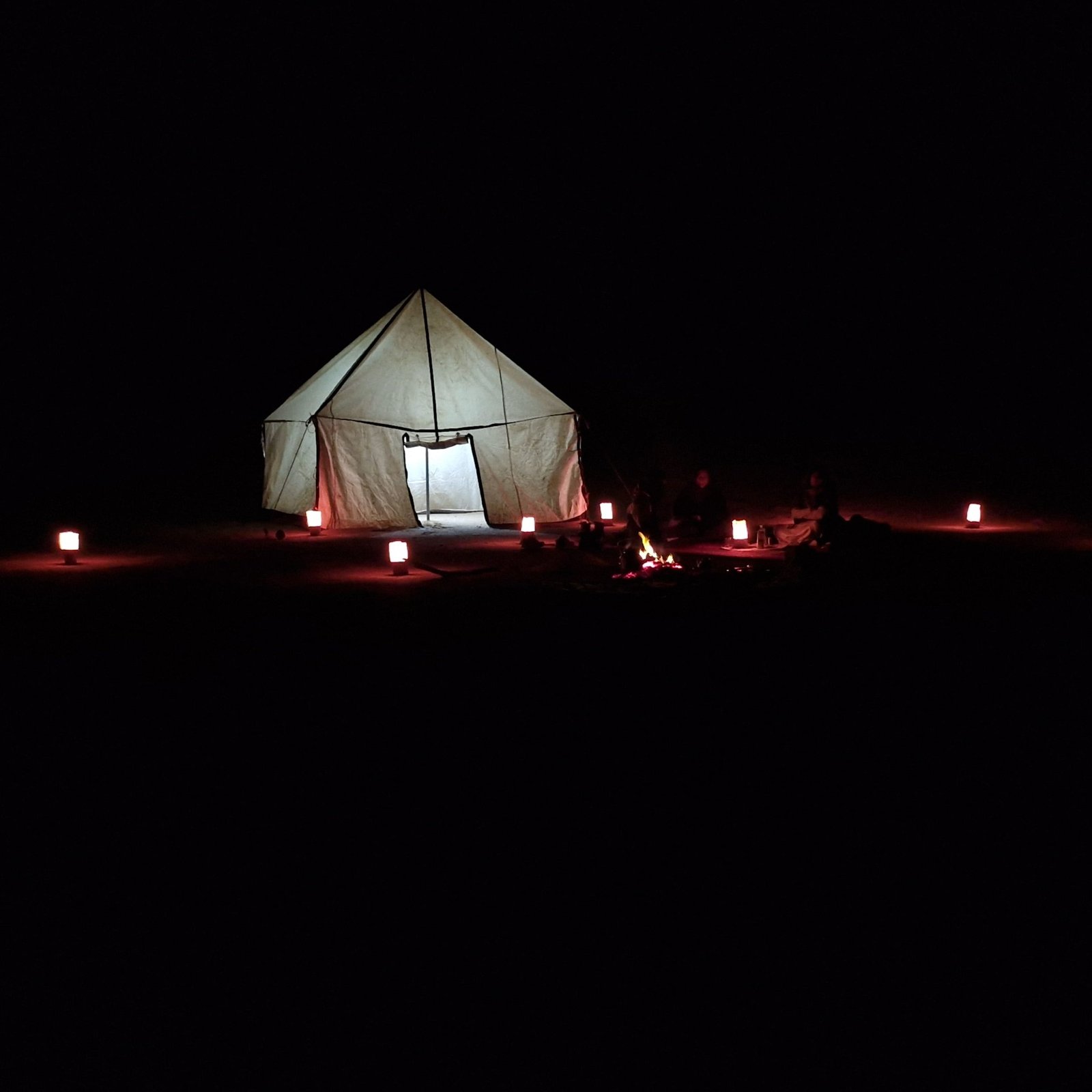
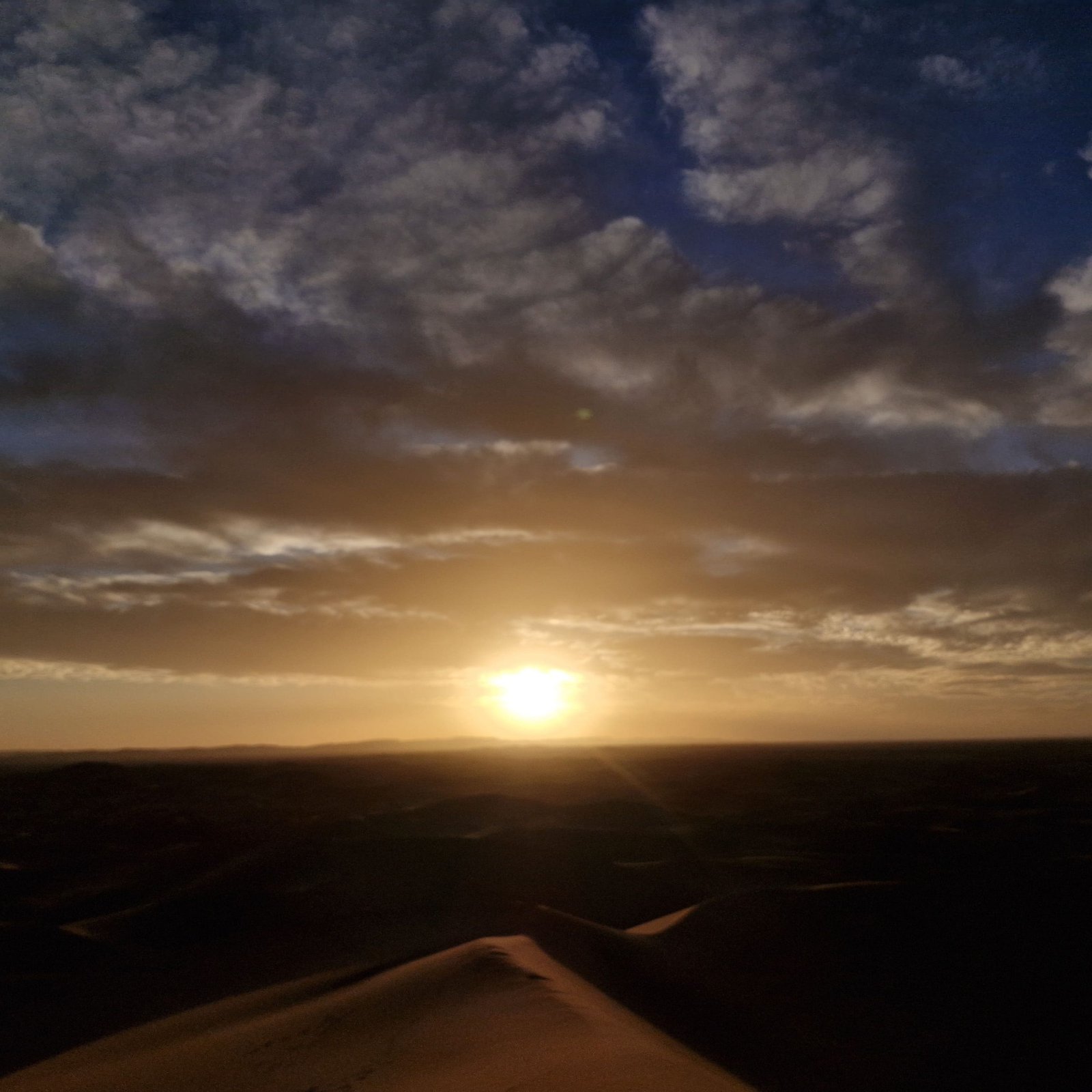
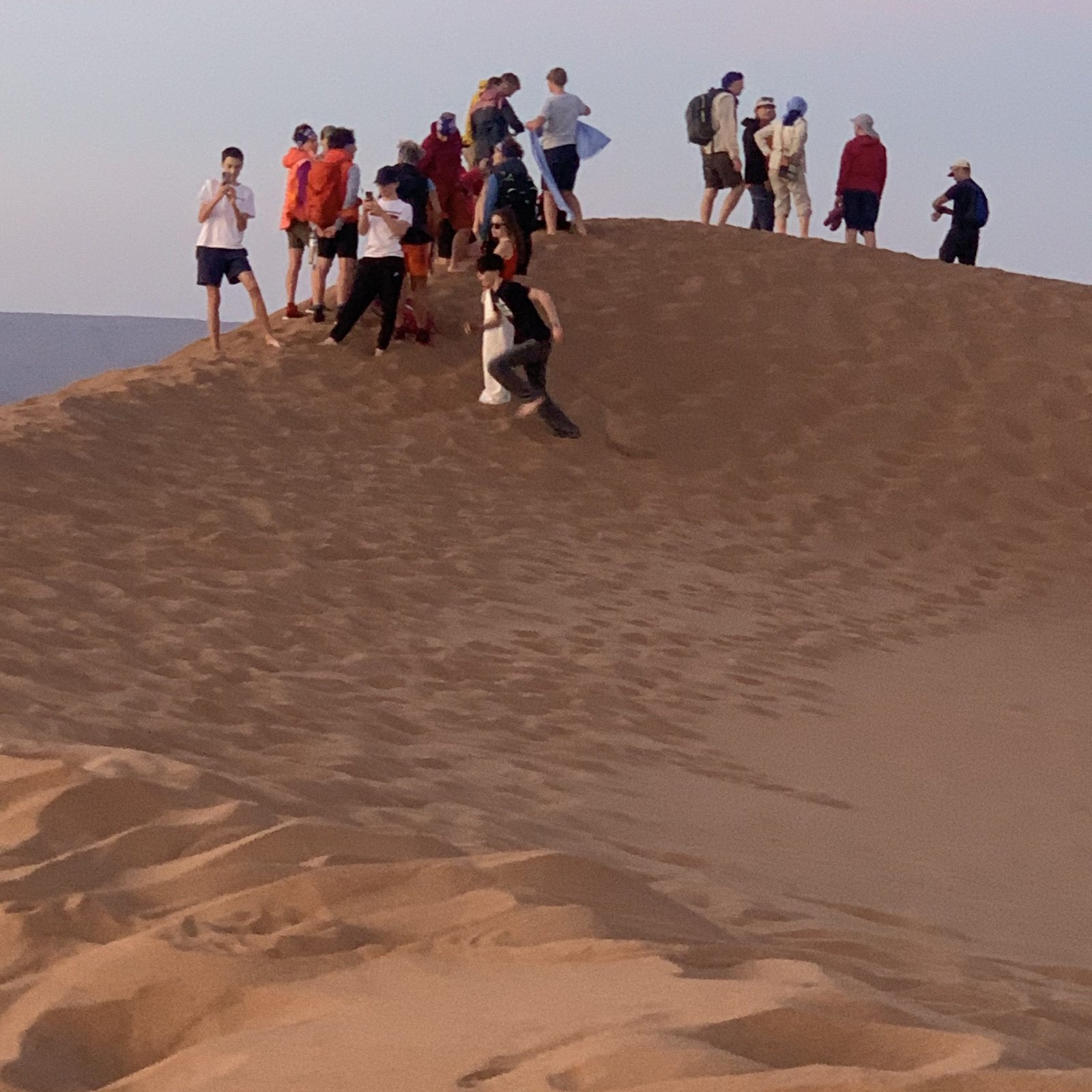
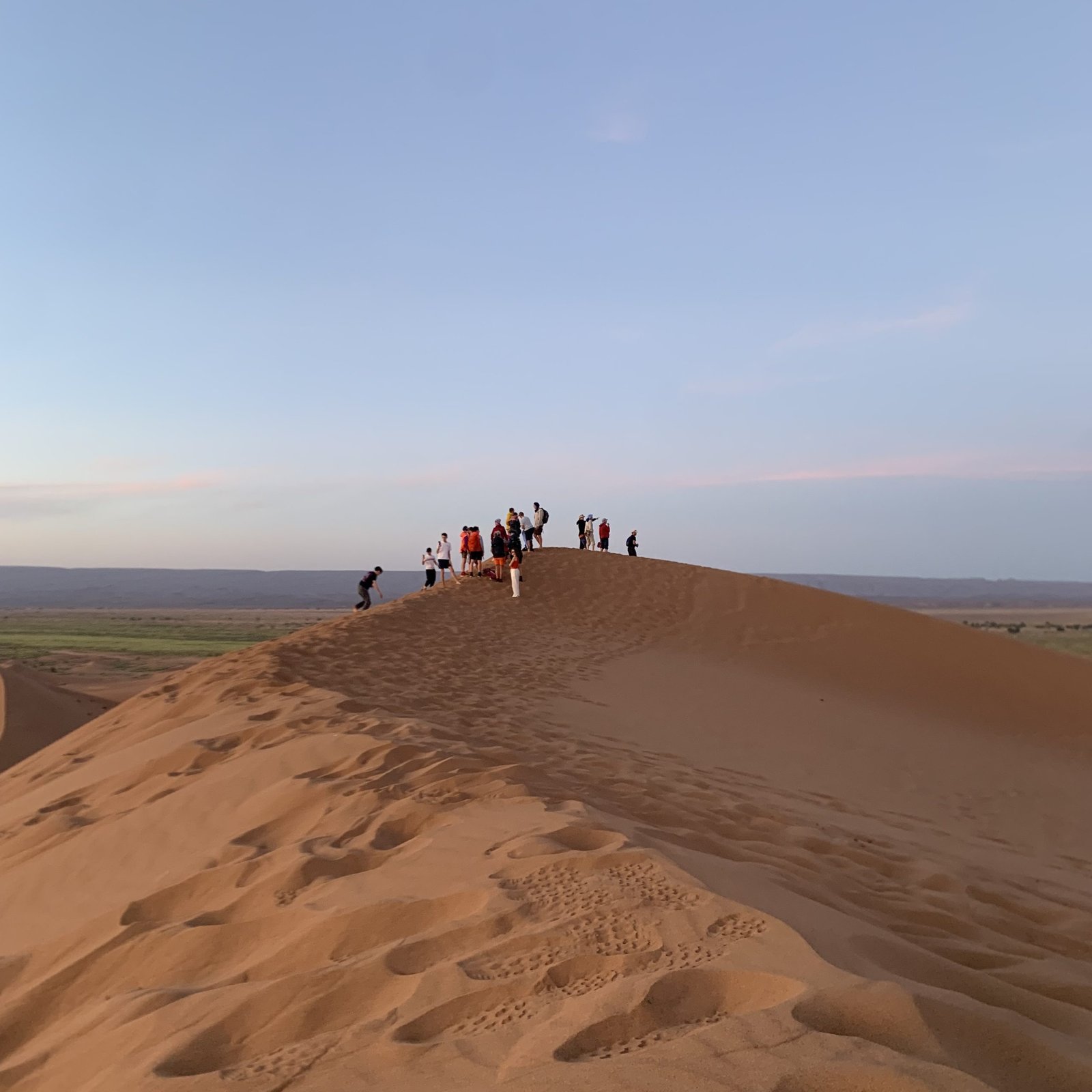
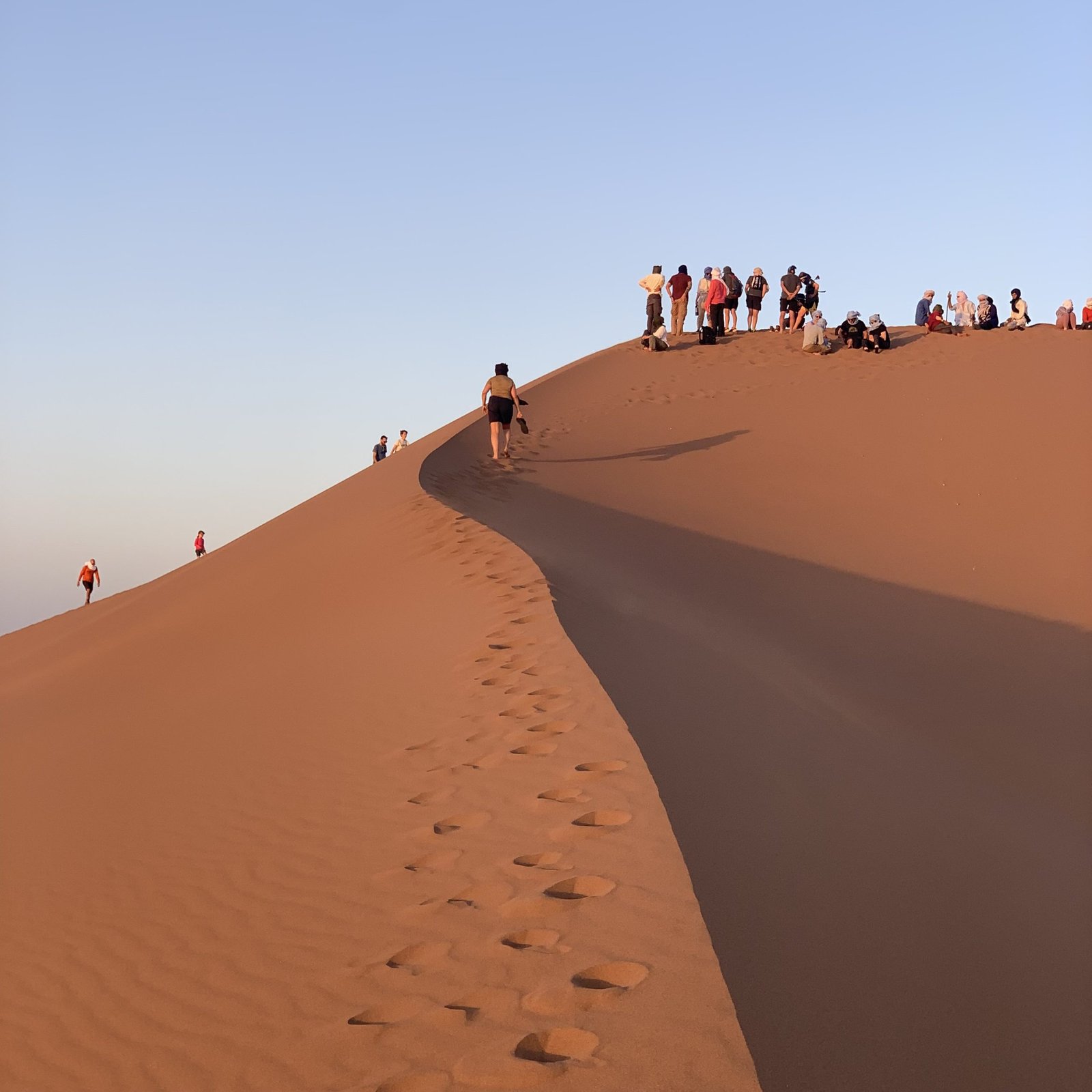
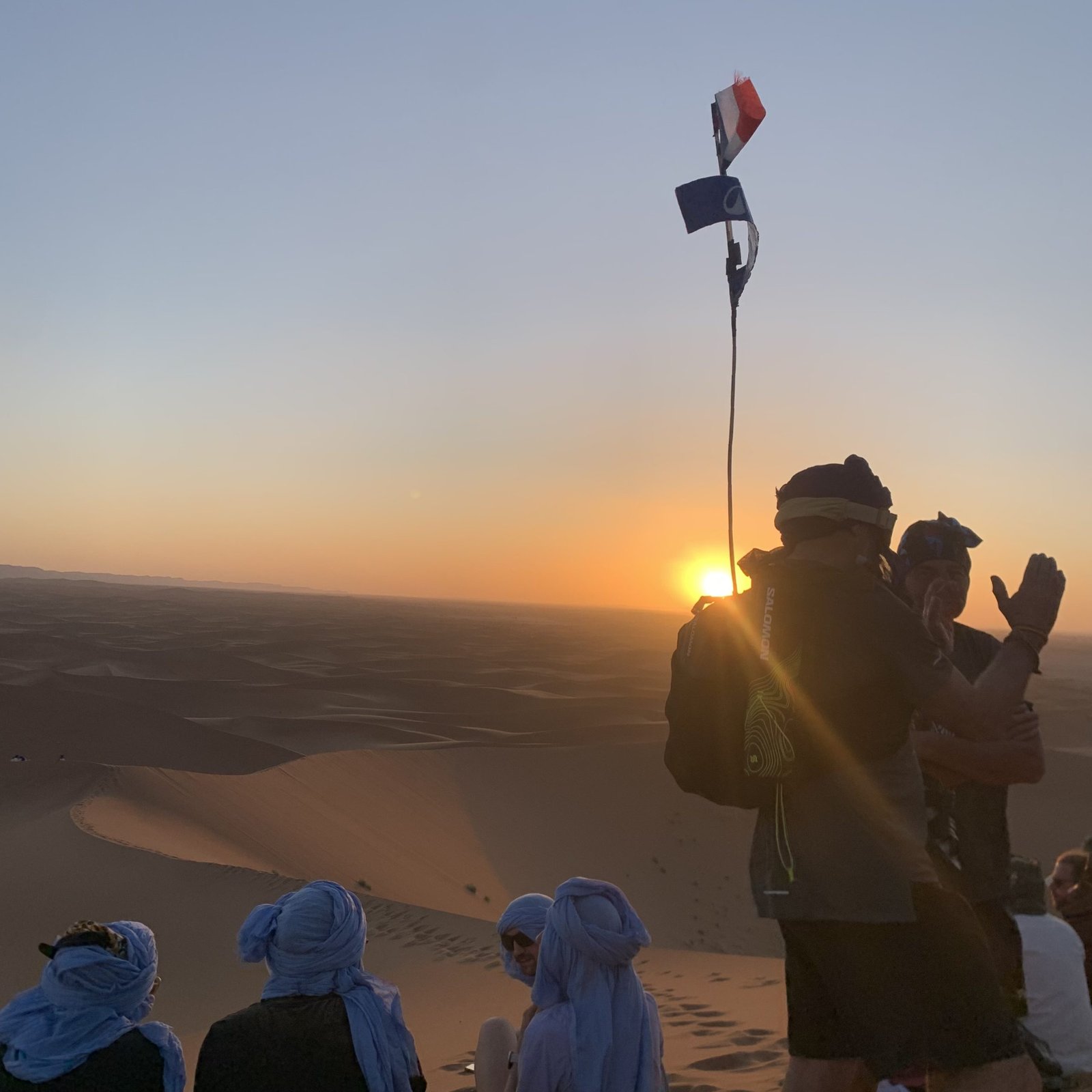
Erg Chigaga desert trekking is one of the most authentic ways to experience the Moroccan Sahara. If you want wide open dunes, deep silence, fewer crowds, and a real feeling of remoteness, Erg Chigaga is a perfect choice. Unlike more accessible dune areas, Chigaga feels wild and spacious — ideal for travelers who want nature, walking, and stargazing rather than a “touristy” desert stop.
In this guide, you’ll learn where Erg Chigaga is, how to reach it, the best season to go, and how to plan a comfortable but authentic desert trek.
Erg Chigaga is located in southern Morocco, beyond the small desert town of M’Hamid El Ghizlane. Many routes reach the dunes by off-road tracks across desert plains and dry lakebeds. You can view the general area on Google Maps by searching “Erg Chigaga” (add this as an outbound link on your page).
There are many desert experiences in Morocco, but Erg Chigaga stands out for a few reasons:
Erg Chigaga is known for being harder to reach than other dune regions, which naturally keeps it quieter. This means more peaceful walks on the dunes, fewer vehicle tracks, and a stronger “Sahara wilderness” feeling.
Chigaga is often described as a large dune field with a long stretch of sand dunes. When you trek here, you don’t just see one dune — you walk through a whole sea of sand.
Erg Chigaga desert trekking is best enjoyed slowly: tea breaks, long horizons, soft light at sunset, and nights where you can truly see the stars.
Most Erg Chigaga desert trekking routes start in M’Hamid El Ghizlane. From there, you can go:
by 4×4 transfer to reach the dunes faster, then trek from the edge of the erg
or combine walking + camels for a deeper traditional trekking style
Tip: If you want a true trek, ask for an itinerary that includes at least 2–4 nights in the desert, not just one night.
Another famous approach is crossing Lake Iriki (a dry lake area) and desert plains before reaching the dunes. This route is great for travelers who love landscapes and want a feeling of “crossing into the Sahara.”
(Outbound link idea: add a map link to “Lake Iriki” or “Iriki National Park”.)
The best months for Erg Chigaga desert trekking are generally October to April, when daytime temperatures are comfortable and nights are cool.
Summer can be very hot in the deep desert. If you travel in late August, you can still do it — but the experience must be planned carefully:
start walking early (sunrise mornings)
rest during the hottest hours
continue walking late afternoon
choose accommodation with good shade and comfort
If you want a more relaxed desert experience in summer, consider one night in Agafay near Marrakech and keep Erg Chigaga for a cooler season.
Here’s a practical list that keeps you comfortable:
light breathable clothes (long sleeves help against sun)
scarf/cheche (wind + sand protection)
hat + sunglasses + sunscreen
closed-toe walking shoes
warm layer for evenings (yes, nights can feel cool)
headlamp
power bank
small daypack for water and essentials
Internal link suggestion: link the words “what to pack” to your packing guide page.
If you’re choosing between dune areas:
Erg Chigaga: more remote, quieter, more “wild” trekking vibe
Merzouga (Erg Chebbi): easier access, more hotels/camps, more visitors
If your priority is authenticity and calm, Erg Chigaga desert trekking is usually the better match.
Here’s a realistic format that works well:
Day 1: Transfer to the desert → first dunes → sunset walk → campfire dinner
Day 2: Full trekking day (3–5 hours walking, breaks, tea, dunes) → night in bivouac
Day 3: Sunrise → short walk → return transfer → end of tour
Internal link suggestion: link “Erg Chigaga desert trekking tour” to your booking page.
Choose a trek focused on walking, not driving.
Avoid very large camps if you want quiet.
Ask for flexible walking time: some days 3 hours, others 5 hours depending on your energy.
If possible, go during shoulder season (October/November or March/April) for the best balance.
Chat With Us