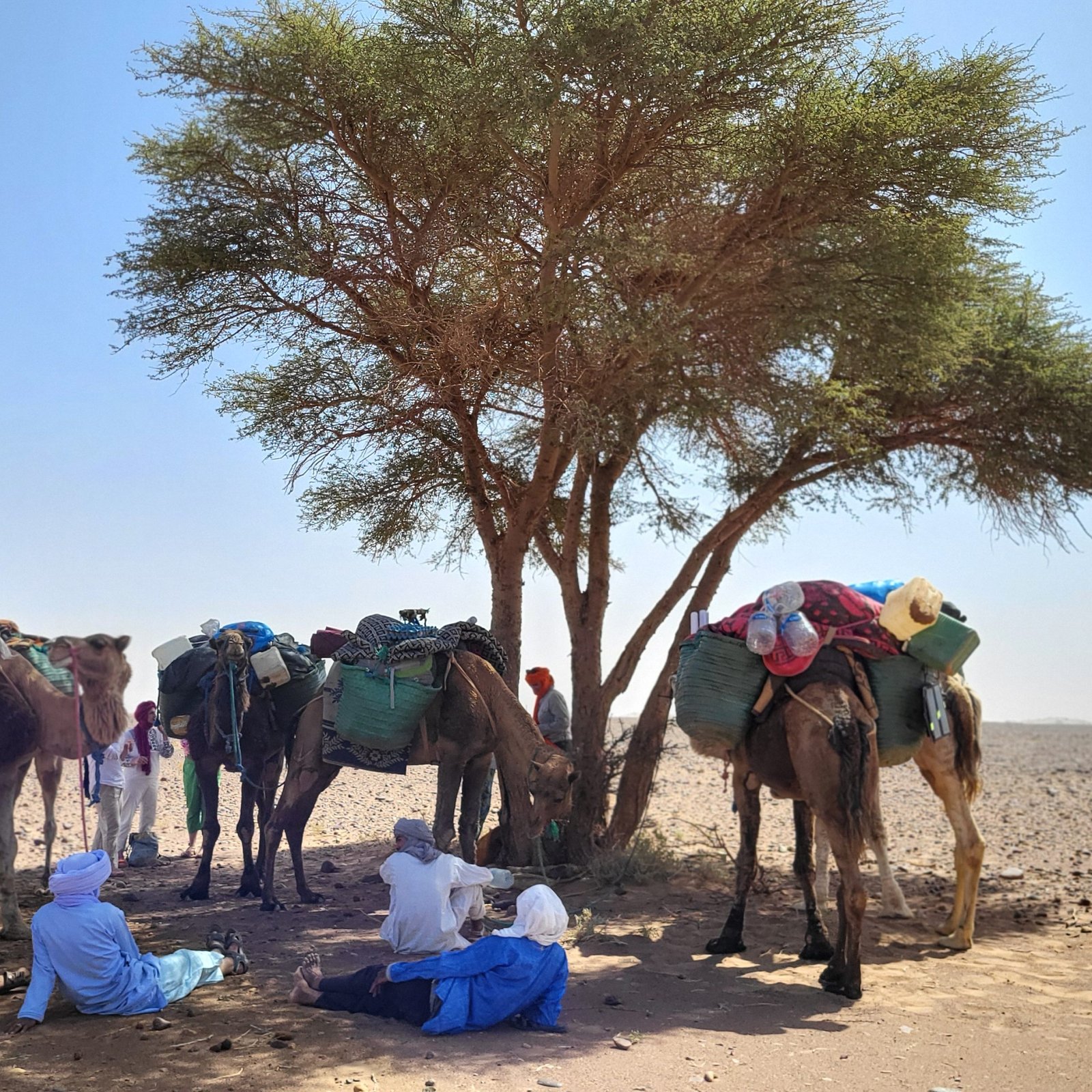
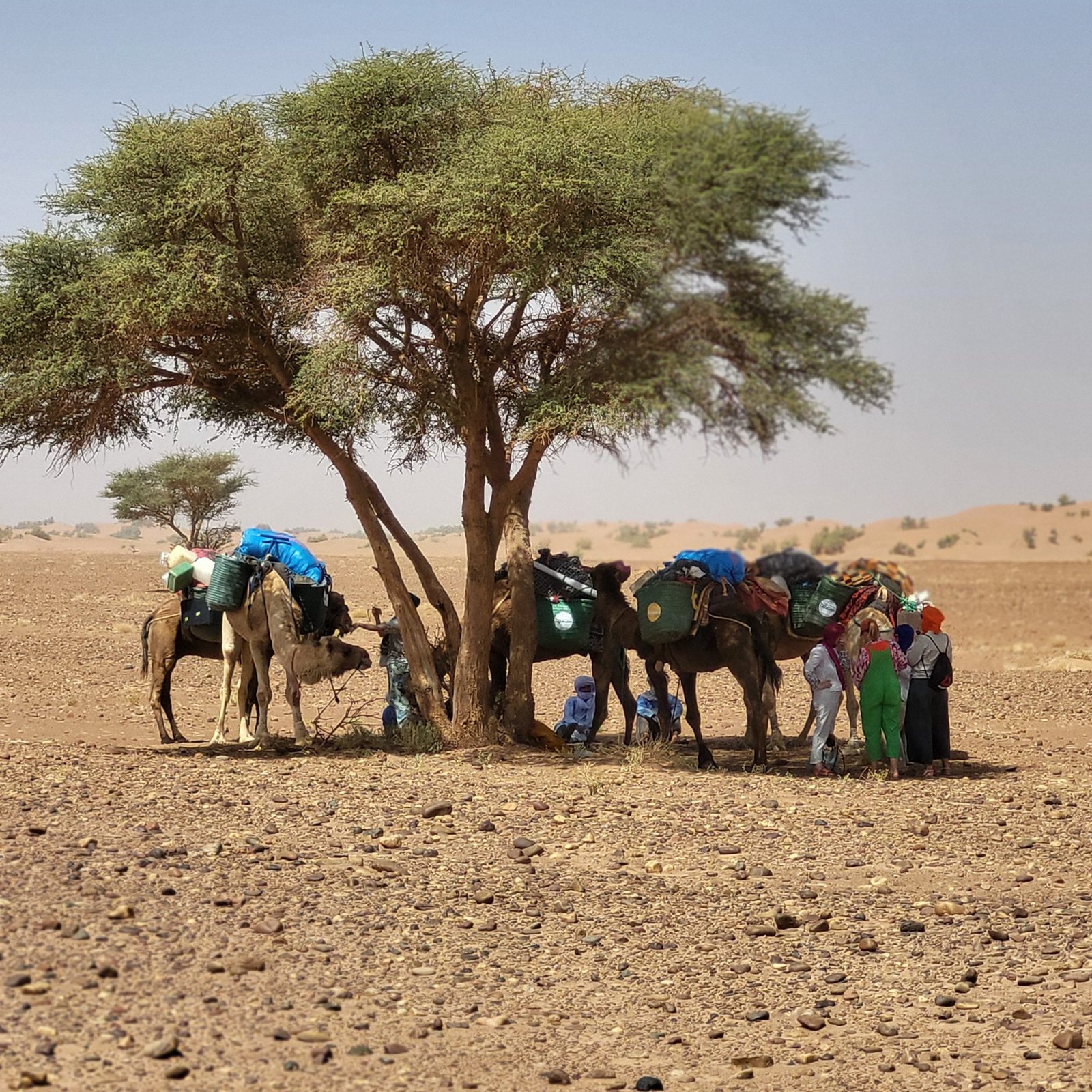
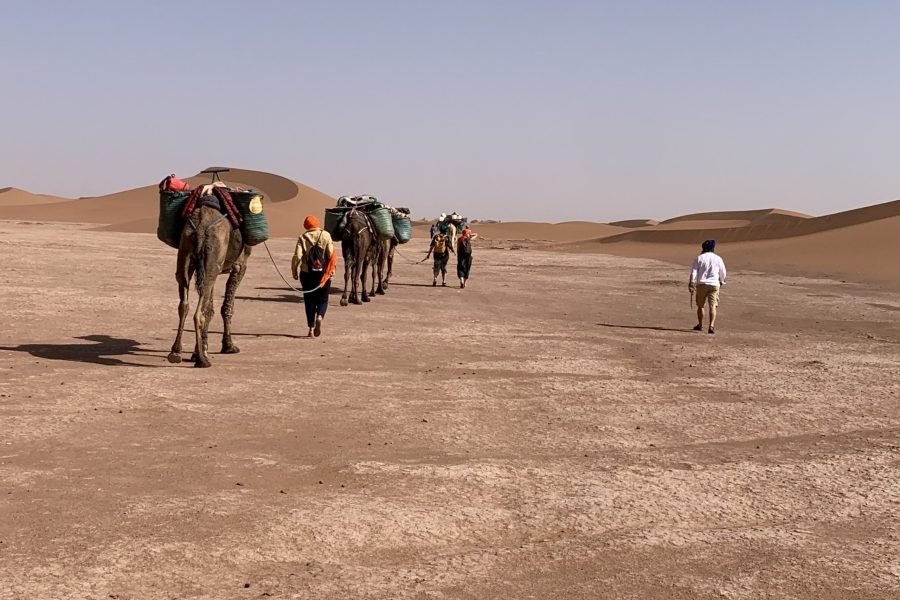
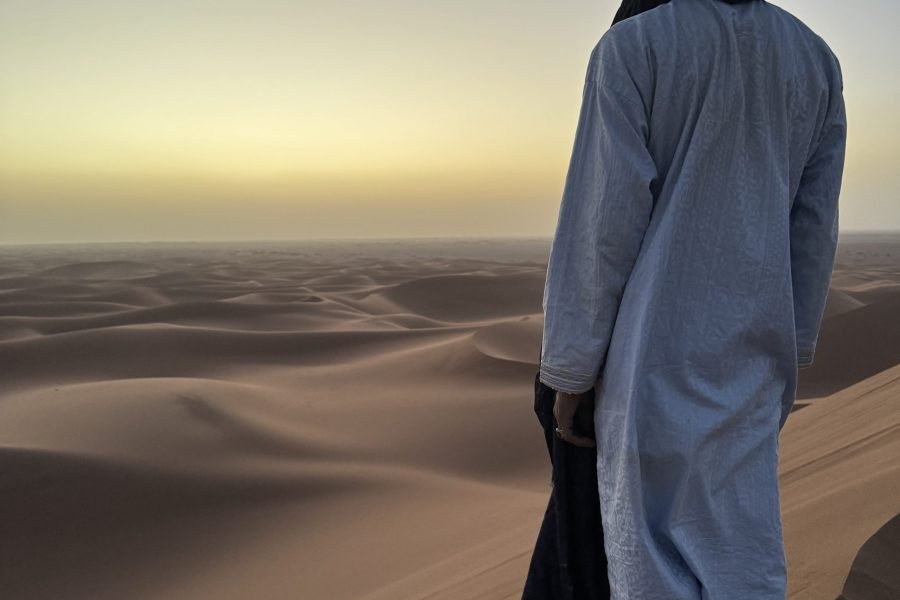
The dromedary in Morocco is much more than a desert icon. In fact, for many Saharan communities, it represents resilience, heritage, and daily survival. Although travelers often see dromedaries during trekking experiences, their real story goes deeper into biology, nomadic culture, and the history of trans-Saharan life.
In this guide, you’ll discover what a dromedary is, how it survives harsh desert conditions, and why it remains essential in Morocco’s southern regions today.
What is a dromedary (and is it the same as a camel)?
A dromedary belongs to the camel family (Camelidae) and is part of the genus Camelus. However, there are two main species people often confuse:
Dromedary (Camelus dromedarius): one hump, adapted to hot deserts (North Africa and the Middle East).
Bactrian camel (Camelus bactrianus): two humps, adapted to cold deserts in Central Asia.
So, while calling a dromedary “a camel” isn’t exactly wrong, it’s simply less precise. In Morocco, the animal you will see is almost always the one-humped dromedary.
A brief history: origins and domestication
The ancestors of today’s dromedaries are believed to be very ancient. Later, the dromedary became domesticated thousands of years ago, and over time it turned into one of the most valuable animals for desert travel and trade.
As a result, dromedaries helped shape life in desert regions—not only for transport, but also for economy and survival.
The dromedary in Morocco: diet, water, and endurance
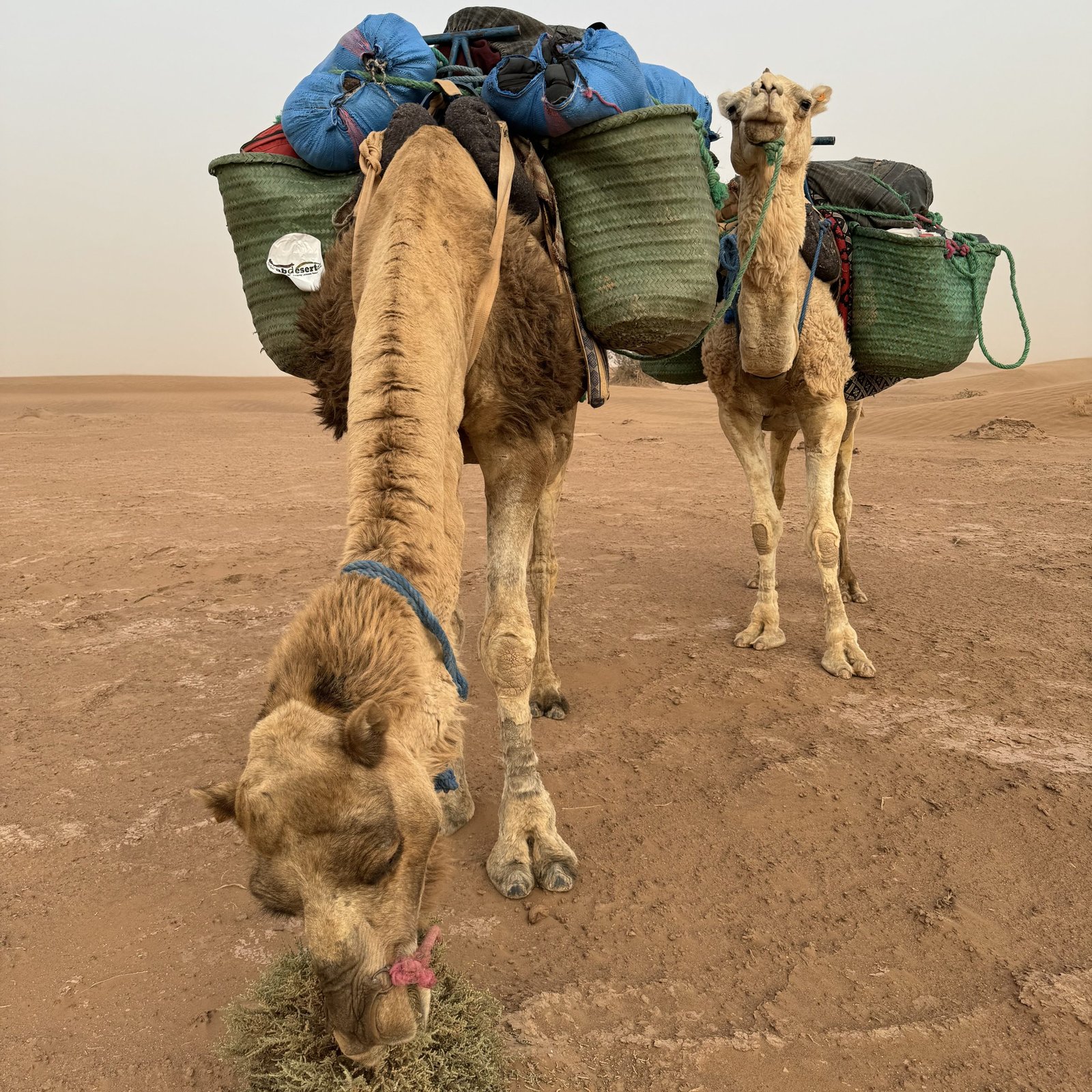
The dromedary in Morocco is an herbivore and a ruminant. In other words, it can digest tough desert plants that many animals cannot.
What do dromedaries eat?
Most of the time, they feed on desert vegetation. However, depending on the season and availability, they may also eat dried dates or cereals in managed herding systems.
How long can a dromedary go without water?
One of the most impressive features of a dromedary is its ability to cope with dehydration. In cooler periods, it can often go many days without drinking. During extreme heat, this time becomes shorter—yet it still outperforms most mammals in desert survival.
Additionally, when a dromedary finally drinks after dehydration, it can rehydrate quickly, which is a key advantage in arid environments.
Size, strength, and lifespan
A typical adult dromedary is large and powerful. Males are usually bigger and stronger than females. Lifespan can reach several decades, although in real-life desert conditions, teeth wear and health issues may shorten that.
Because of this, herders often check dental condition to estimate age and vitality.
Reproduction and herd life
Breeding depends on environmental conditions such as food, water, and temperature. Gestation lasts roughly about 13 months.
Typically:
Therefore, healthy pasture and water access can strongly influence herd growth.
How far can a dromedary walk?
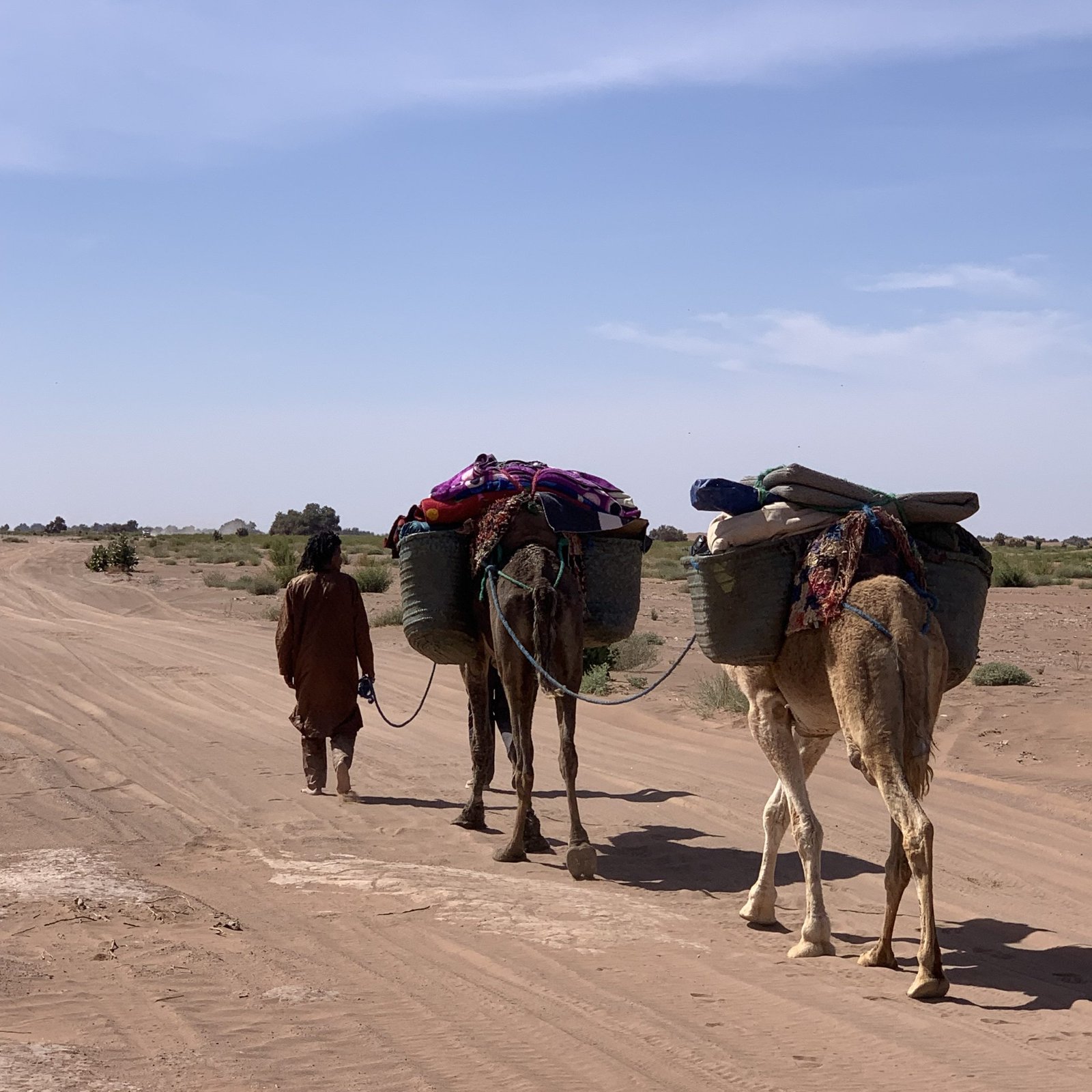
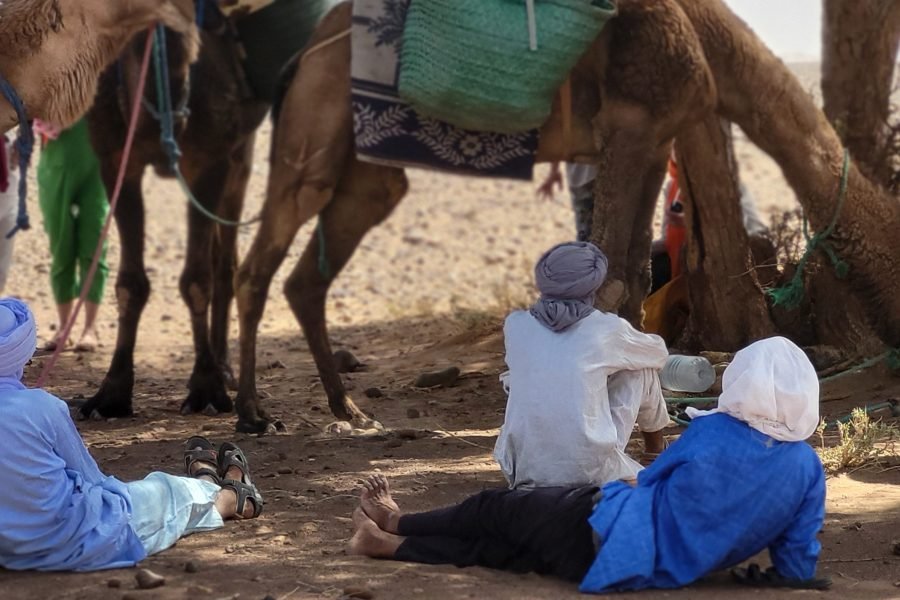
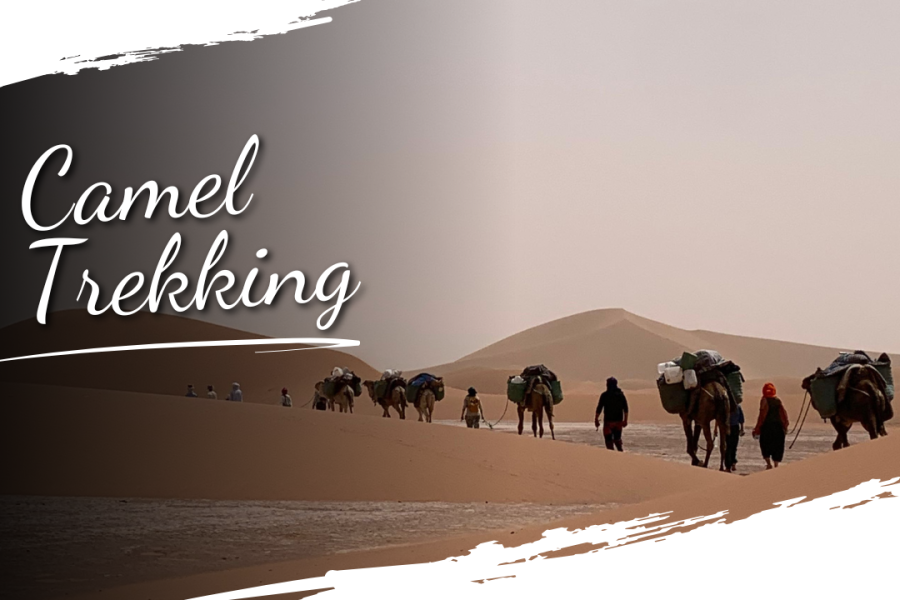
The dromedary is a natural long-distance walker. Without load, it can cover very long distances in a day. With a load, daily distance decreases—yet it remains a reliable carrier for desert travel and trekking logistics.
That’s why, even today, dromedaries are used for:
carrying supplies on trekking routes
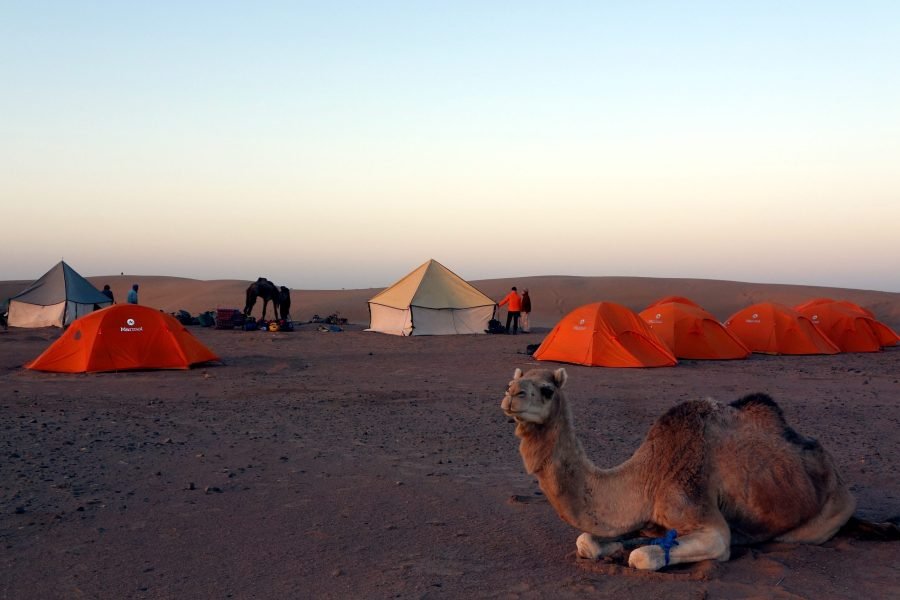
transporting water and bivouac equipment
supporting multi-day walking itineraries in remote dunes
Why the dromedary is perfectly adapted to the Sahara
The dromedary in Morocco survives because its body is designed to save water and manage heat. For example:
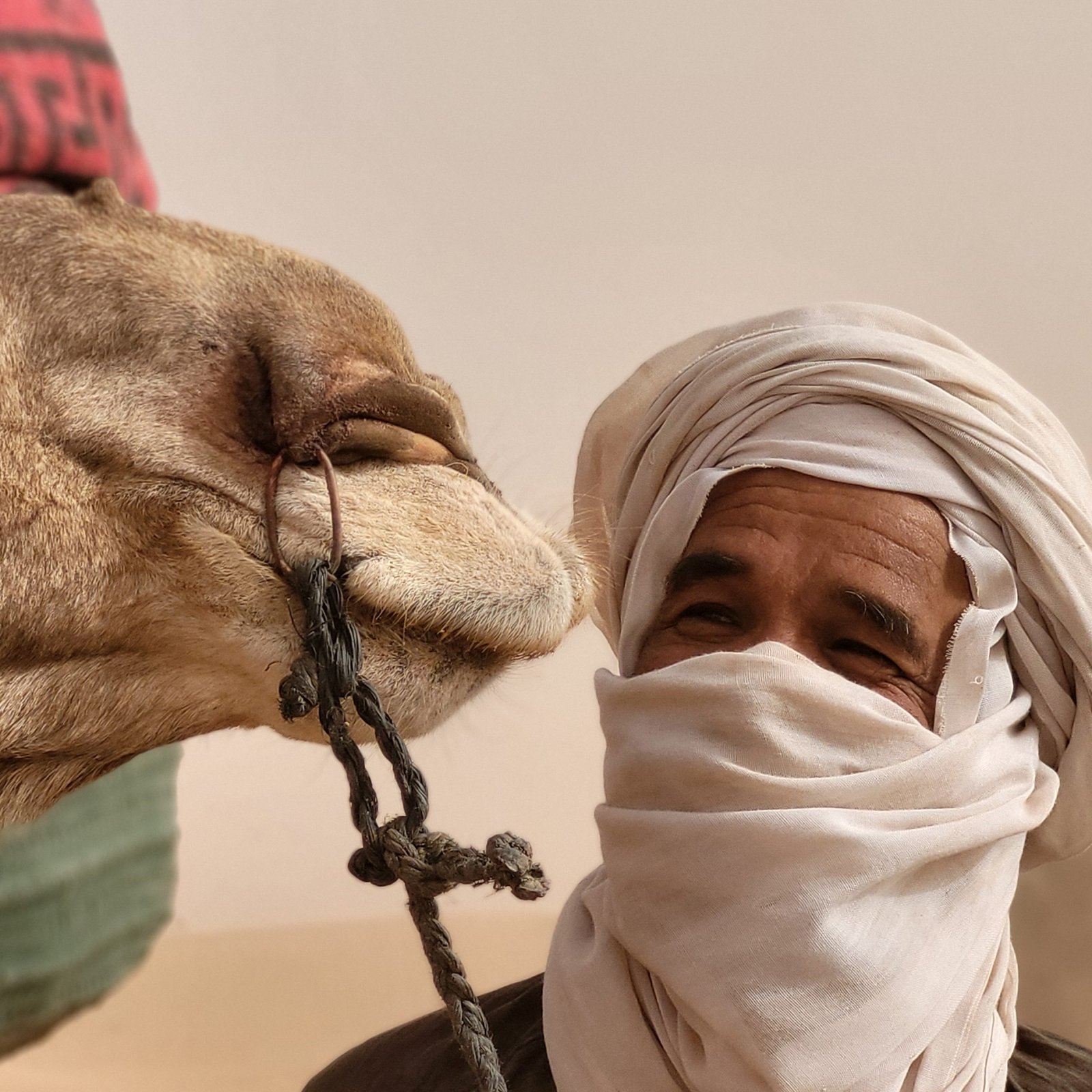
Closable nostrils help reduce sand intake and moisture loss.
Long eyelashes protect eyes from wind and sand.
Low sweating limits water loss in extreme heat.
Fat stored in the hump provides energy reserve when food is scarce.
Long legs keep the body farther from hot ground.
Concentrated urine and dry droppings show highly efficient water conservation.
In short, the dromedary is not “lucky” to survive the desert—its whole biology is built for it.
Types of dromedaries in Morocco: Jeblli and Sahraoui
In Morocco, people often describe two broad types based on region and build:
1) Jeblli (mountain type)
Generally smaller and slimmer, often associated with mountain or mixed environments.
2) Sahraoui (desert/plain type)
Usually more robust and common in desert areas, with traits suited to long, dry conditions.
Of course, these categories can vary by local traditions and breeding, but they help explain why some animals look different from others across Morocco.
The cultural and economic role of the dromedary in southern Morocco
In southern Morocco, dromedaries are part of daily life and identity. Historically, owning dromedaries could represent wealth and social status. Moreover, herding continues to be an important livelihood for many communities.
Common uses
Milk (often consumed locally)
Meat (commonly for special occasions)
Hair/wool for textiles, blankets, rugs, and sometimes tents
Leather for traditional equipment
Riding and pack use for trekking and desert movement
Festivals and races in cultural events