
A Typical Day on a Sahara Trek
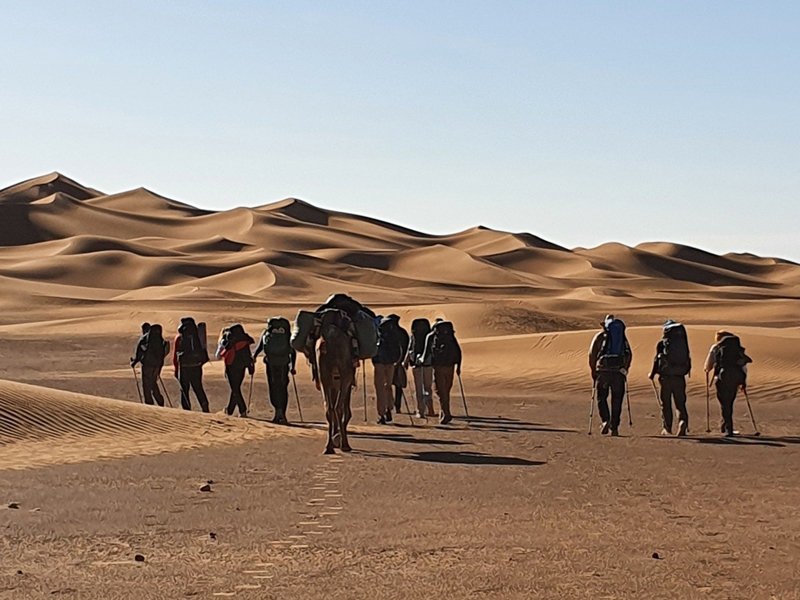
A typical trekking day begins early, while the desert air is still cool and fresh. After breakfast and Moroccan tea, the camels are loaded and the caravan prepares to leave.
During the morning, everyone follows the caravan at a comfortable pace. Depending on the route and weather, the walk may continue for several hours before the midday rest.
Once the morning journey is complete, the group stops for lunch and a longer break. This peaceful part of the day offers time to relax, take photographs, read or simply enjoy the silence.
As the afternoon becomes cooler, the journey continues across the open desert. The changing sunlight creates new colors and shadows across the sand, making each section of the route feel different.
By late afternoon, the caravan begins looking for a suitable place to spend the night. Meanwhile, the team prepares the camp while travelers can watch the sunset or explore the surrounding dunes.
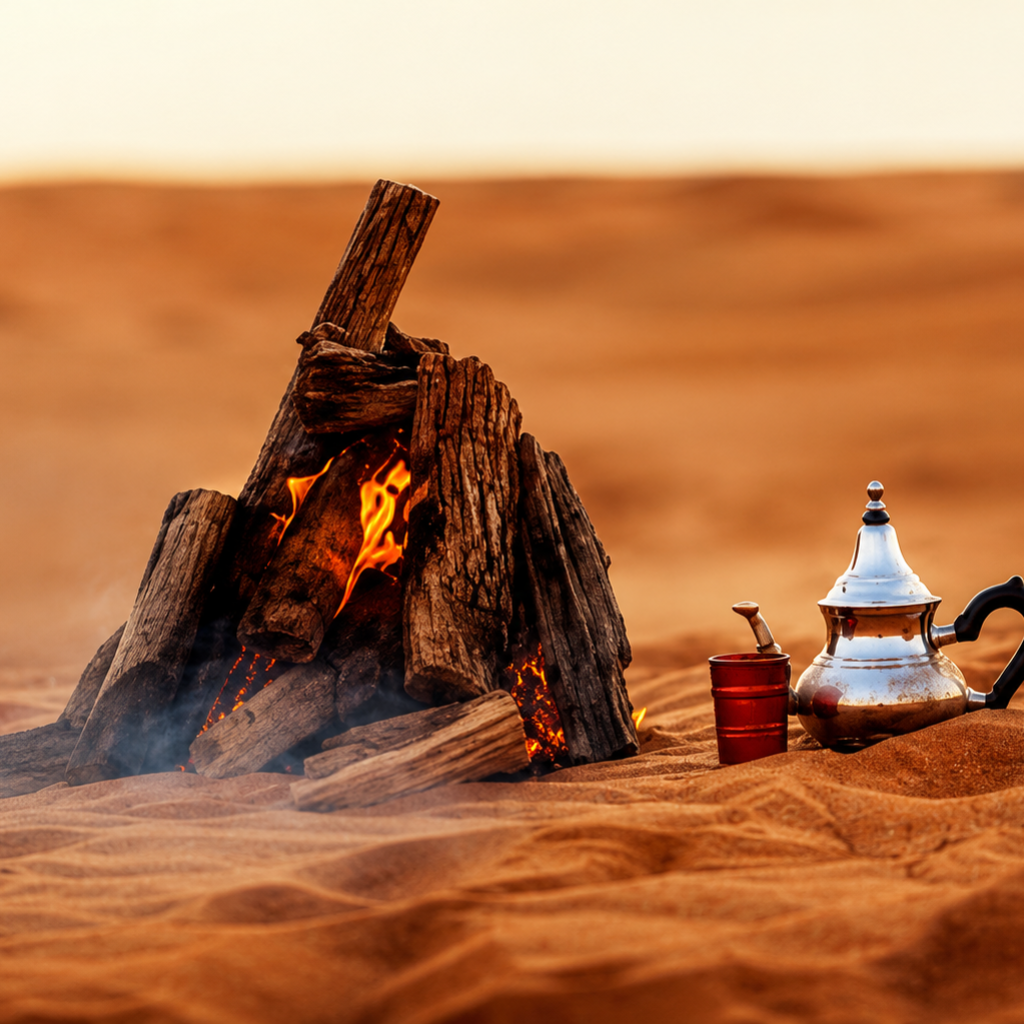
After dinner, everyone gathers around the fire for Moroccan tea, conversation and traditional music. On clear nights, the evening often ends beneath a sky filled with stars.
A Different Kind of Travel
Modern travel often means visiting several places within a short period. Sahara trekking follows a much slower rhythm.
Rather than rushing from one attraction to another, the journey gives you time to experience the landscape between destinations. A morning might involve several hours of walking before the group stops beneath a tamarisk tree for lunch and rest.
Along the way, small details become easier to notice. Animal tracks appear in the sand, the wind changes the shape of the dunes and the shadows gradually move across the desert floor.
Later, the camel caravan continues toward the evening camp. There is no busy road to follow and no need to hurry.
As sunset approaches, the landscape becomes quieter and the colors begin to change. At that moment, the desert itself becomes the main experience.
Simple moments often become the memories travelers remember most. A glass of tea, a conversation beside the fire or a silent walk through the dunes can stay with you long after the journey has ended.
Walking With a Camel Caravan
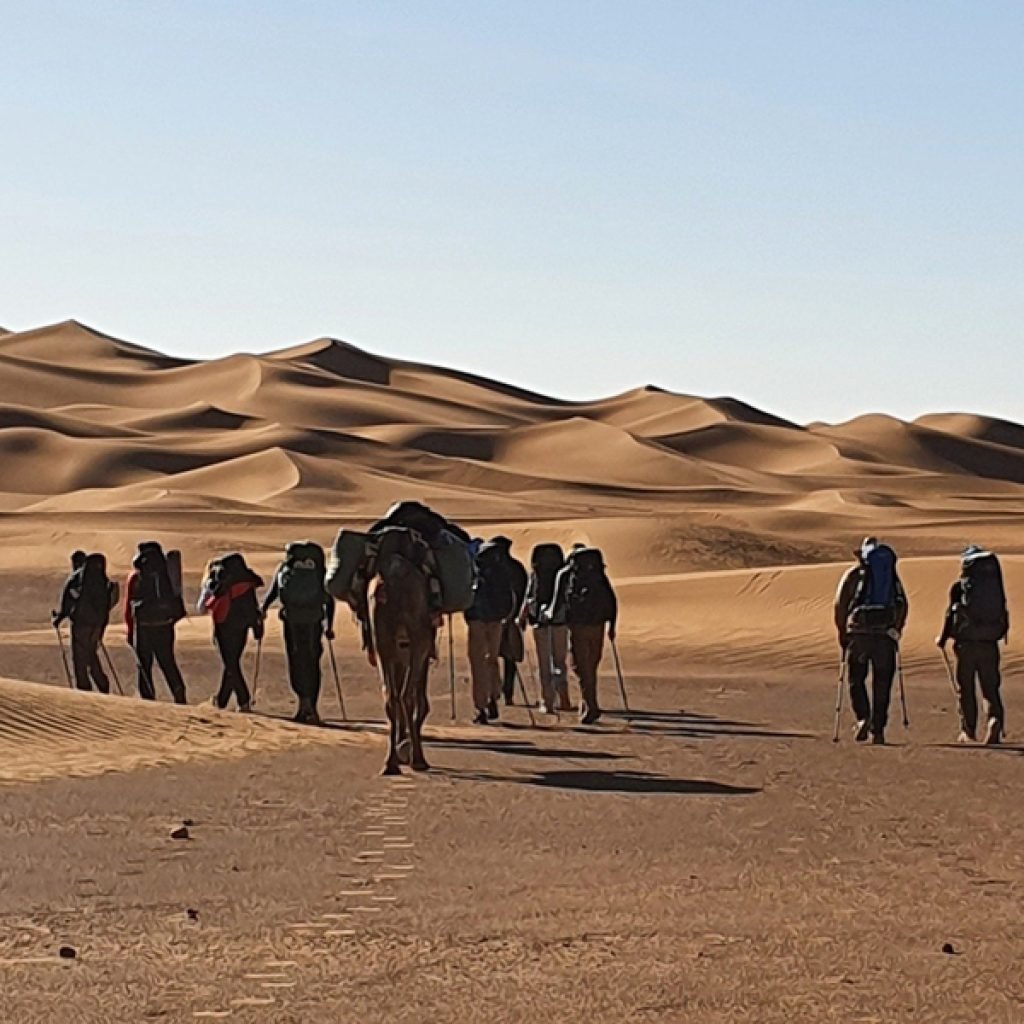

Trekking in the Moroccan Desert is a walking adventure full of emotions and surprises. You will explore authentic Morocco and spend the night in desert bivouacs, reminiscent of tales from One Thousand and One Nights.
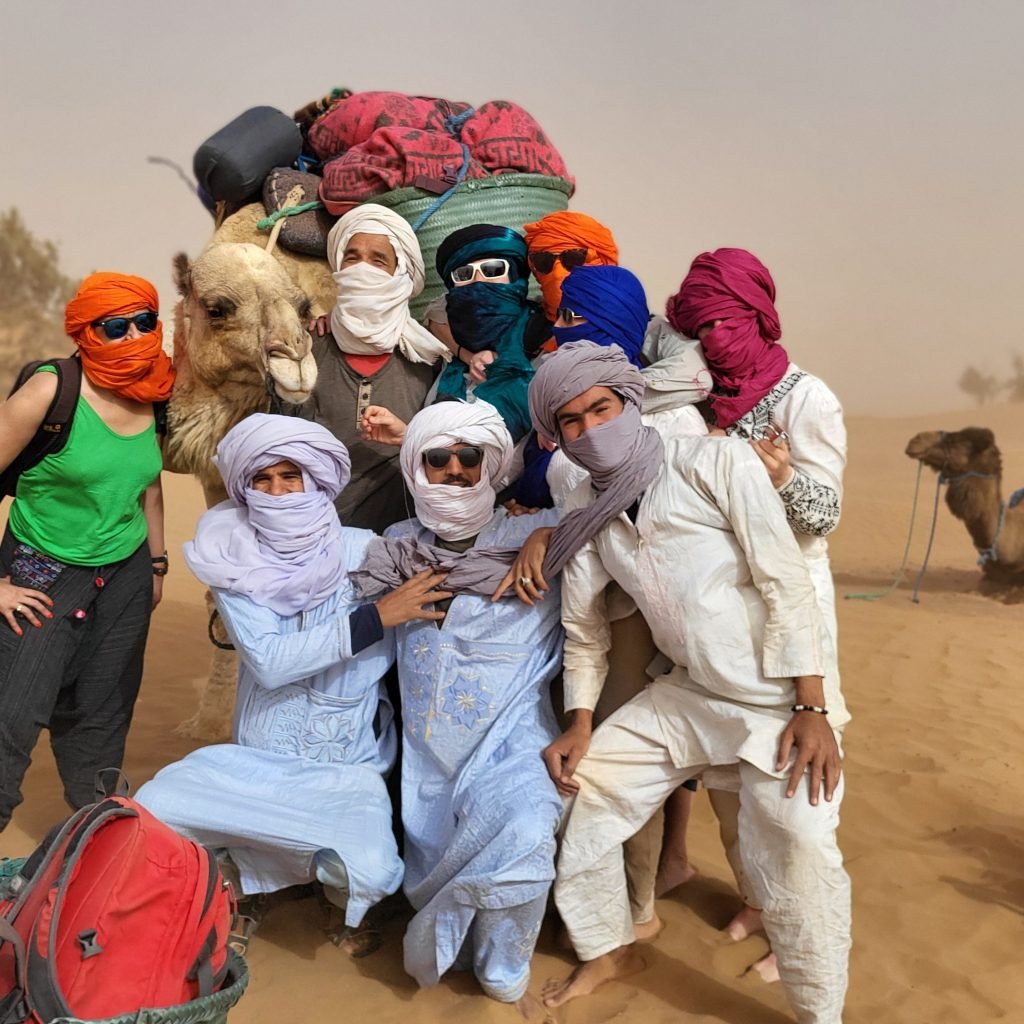
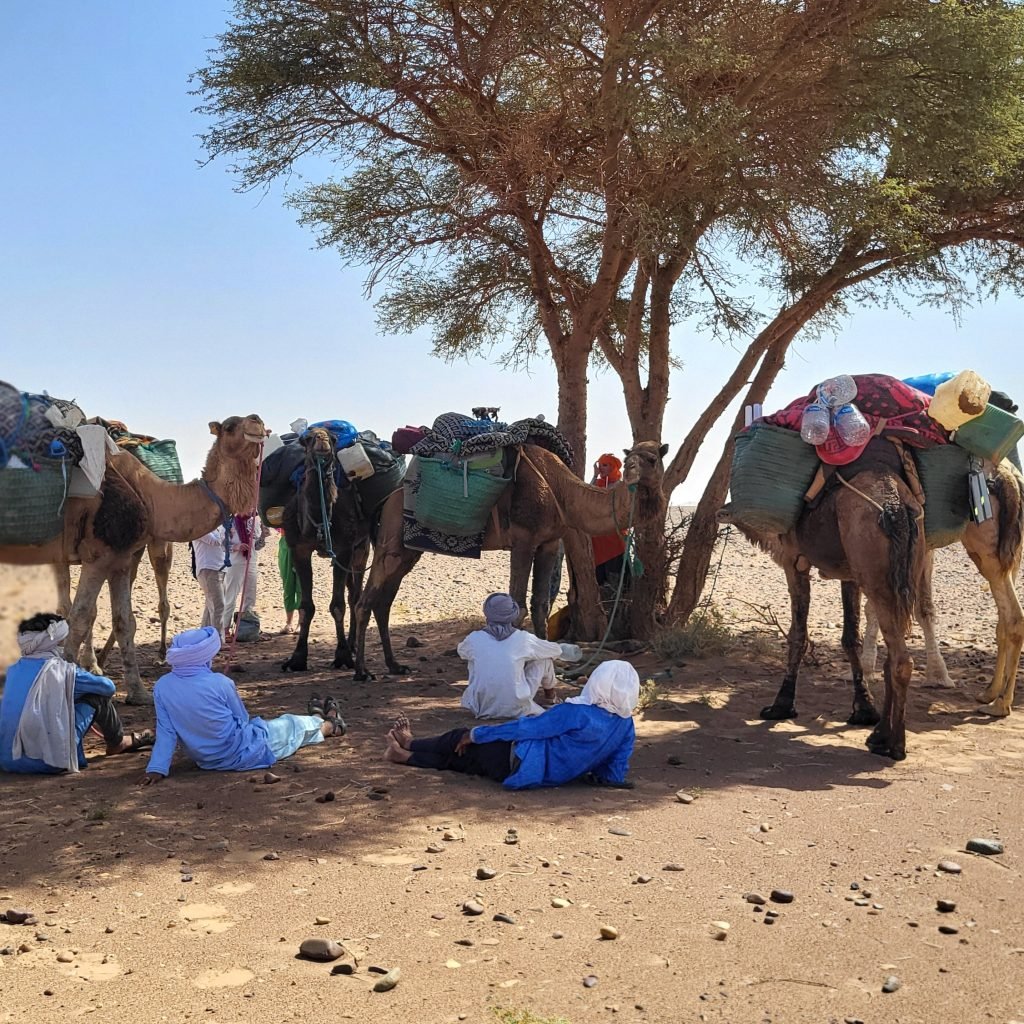
Walking beside a camel caravan gives you a different perspective of the Sahara. Instead of seeing the desert from a vehicle, you move through it slowly and have time to observe the landscape.
The camels carry the main luggage, food and camping equipment. As a result, travelers can keep their daypacks light and focus on the walk.
For generations, camel caravans have played an important role in desert travel. Today, they continue to offer a practical way to move through remote areas while creating a strong connection between people, animals and the landscape.
Throughout the day, the rhythm remains simple. Walk for a while, stop for a rest, share some tea and continue when the conditions are comfortable.
That simplicity is one of the special parts of a Sahara trekking journey.
From M’Hamid El Ghizlane Into the Sahara
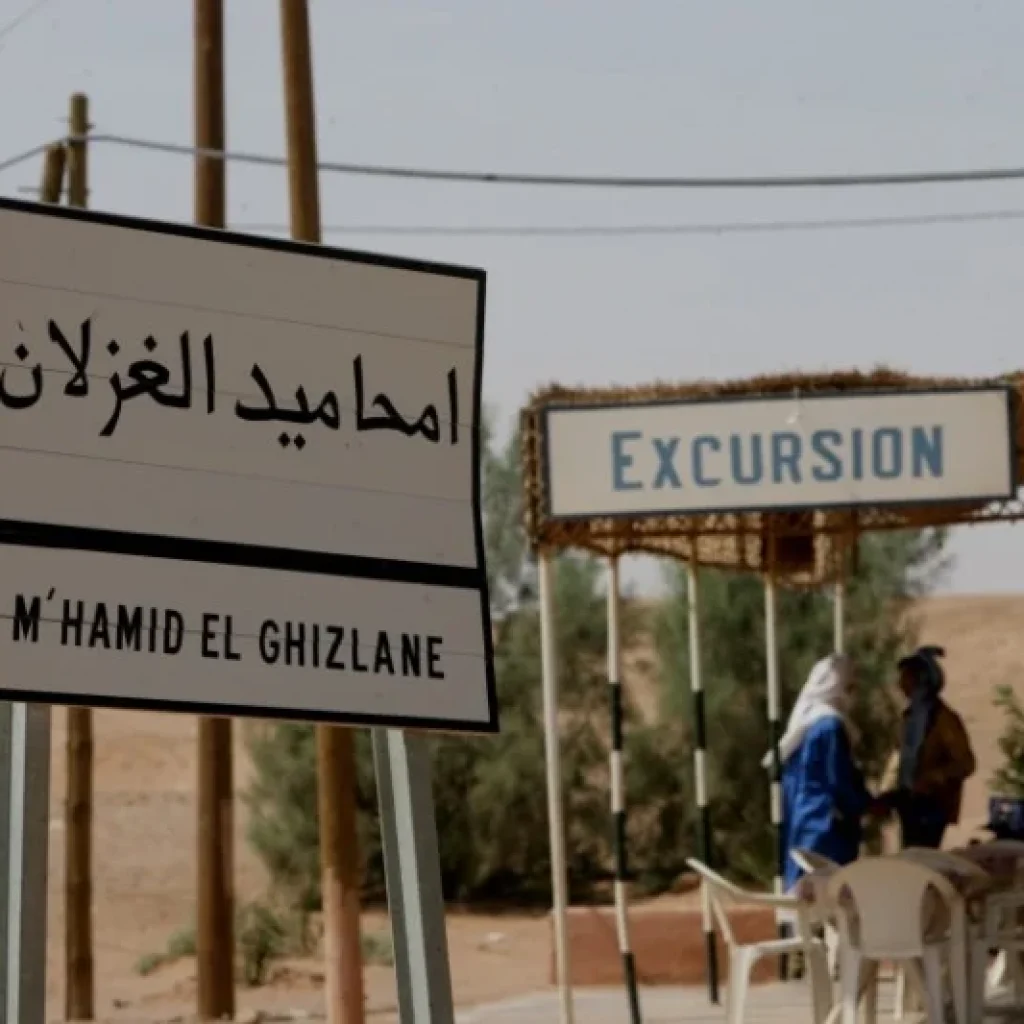
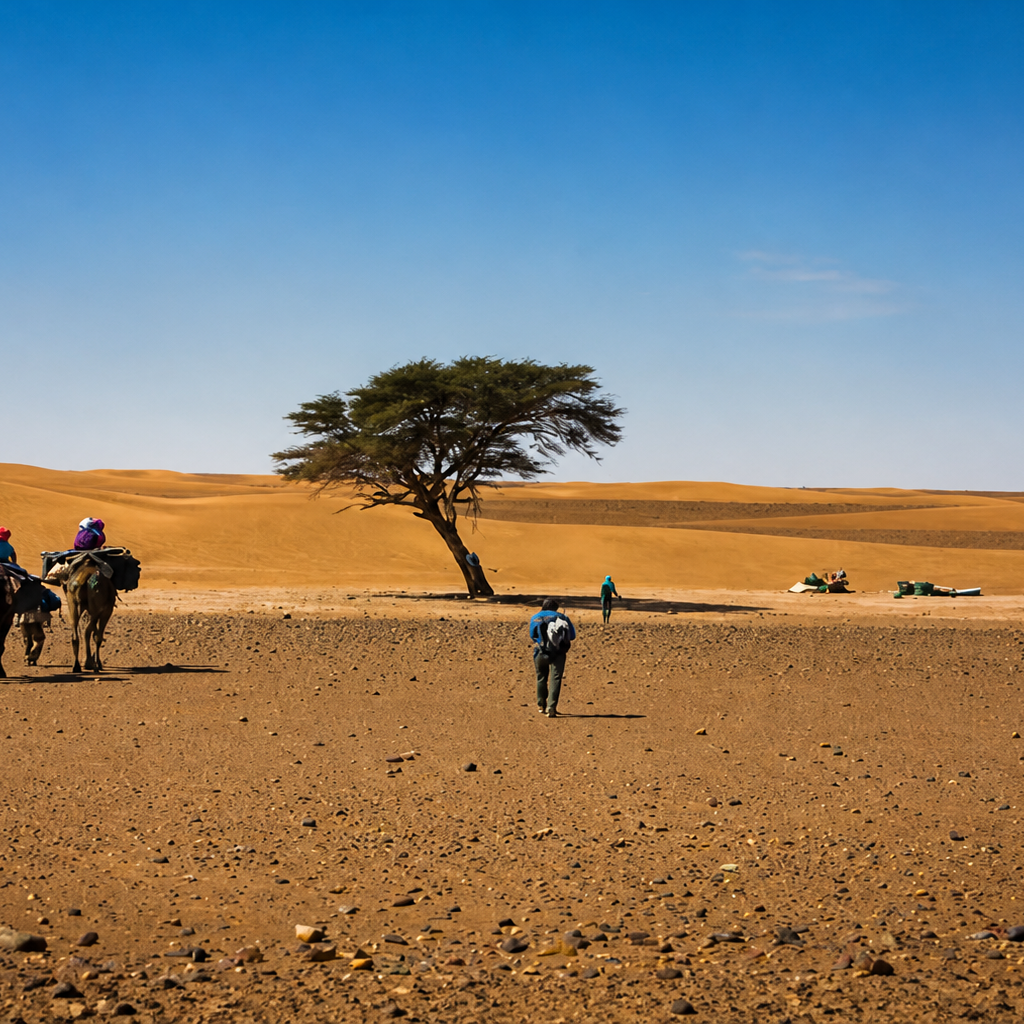
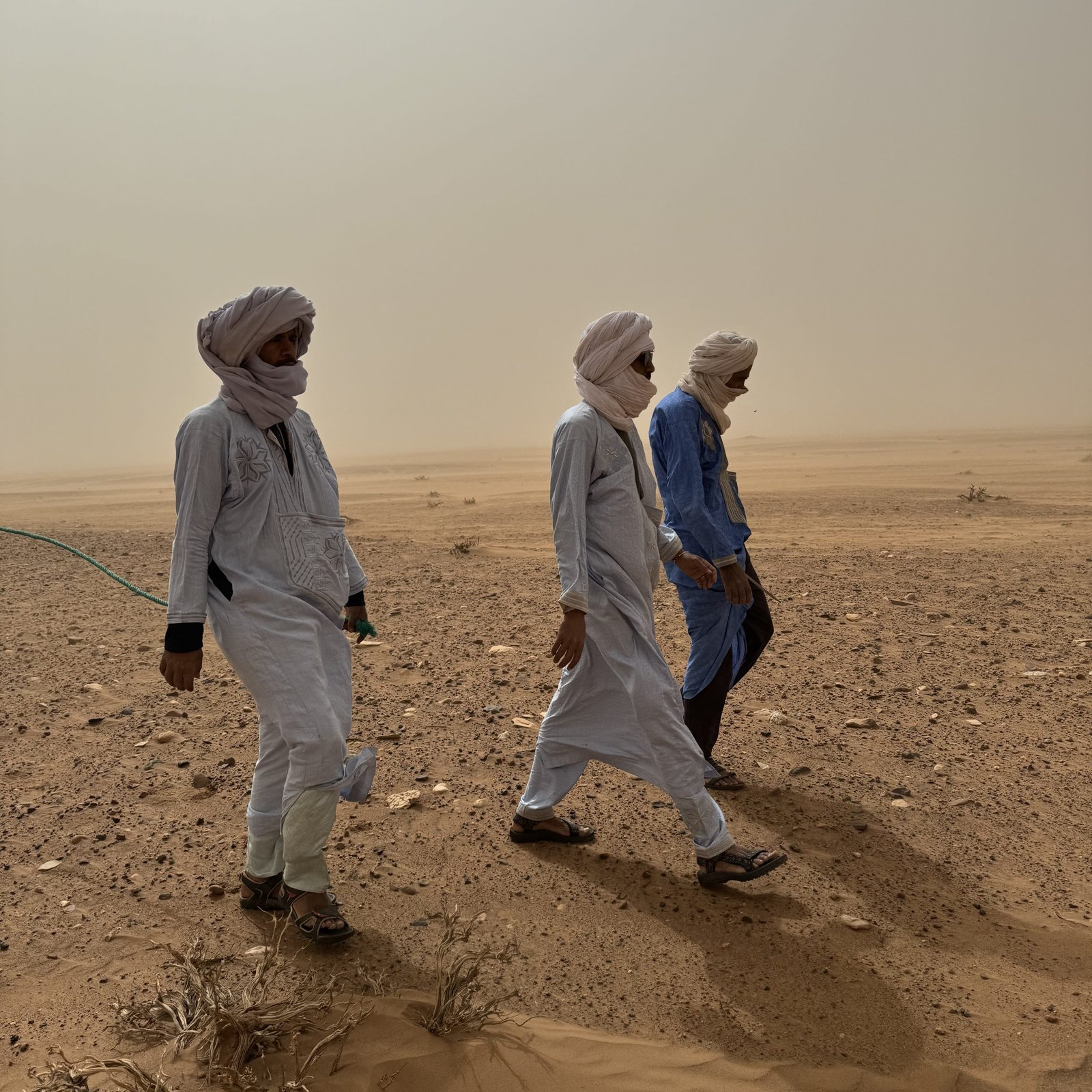
M’Hamid El Ghizlane is located at the southern end of the Draa Valley and provides access to the open desert of southern Morocco.
Beyond the town, paved roads gradually give way to wider desert landscapes. Buildings become less frequent, the horizon opens and the surroundings become increasingly peaceful.
From this region, travelers can explore different landscapes on the way toward remote areas such as Erg Chigaga. However, reaching the dunes is only one part of the journey.
The route itself offers many experiences along the way. Rocky ground can gradually become softer sand, while small areas of vegetation appear between the more open sections of desert.
For this reason, a multi-day trek allows travelers to experience much more than a single viewpoint or sunset stop.
What You See While Trekking the Sahara
The Sahara is often imagined as an endless sea of golden dunes. In reality, its landscapes are much more varied.
Rocky plains, gravel surfaces, sandy valleys and areas of tamarisk can all appear along a desert trekking route. Eventually, larger dunes may rise from the surrounding landscape.
Weather and sunlight also transform the scenery throughout the day. Morning shadows can make the dunes appear sharply defined, while the softer afternoon light gives the sand warmer tones.
Even familiar landscapes can look completely different by sunset.
Walking through the desert therefore becomes a continuous discovery. Every few hours, the ground, colors and horizon can change.
Sleeping in a Wild Desert Camp
Spending the night in a remote desert camp is one of the most memorable parts of a multi-day trek.
After sunset, the surroundings become remarkably quiet. Dinner is prepared, Moroccan tea is served and the campfire becomes a natural place to gather.
Traditional music and conversation may continue into the evening. At the same time, there is always space for travelers who simply want to sit quietly and enjoy the atmosphere.
Away from city lights, the night sky becomes especially impressive. On clear evenings, you can step outside your tent and look across the dunes beneath the stars.
For many travelers, this peaceful connection with the desert becomes one of the highlights of the entire journey.
Experience the Sahara With Sahara Vibe
Sahara Vibe is a local family company connected to the desert around Zagora and M’Hamid. Our journeys are designed for travelers who want to experience the Sahara at a slower and more personal pace.
Instead of following a rushed schedule, guests travel with a local team and camel caravan. Along the way, there is time to share Moroccan tea, enjoy traditional meals and learn more about desert life.
Our private trekking journeys can include camel caravans, remote desert camps, traditional cooking, campfire evenings, music and stargazing.
Most importantly, the experience is built around the landscape rather than around a long list of tourist stops.
The Sahara already offers something special: space, silence and time.
That is what we want travelers to experience with us.
0 Comment