
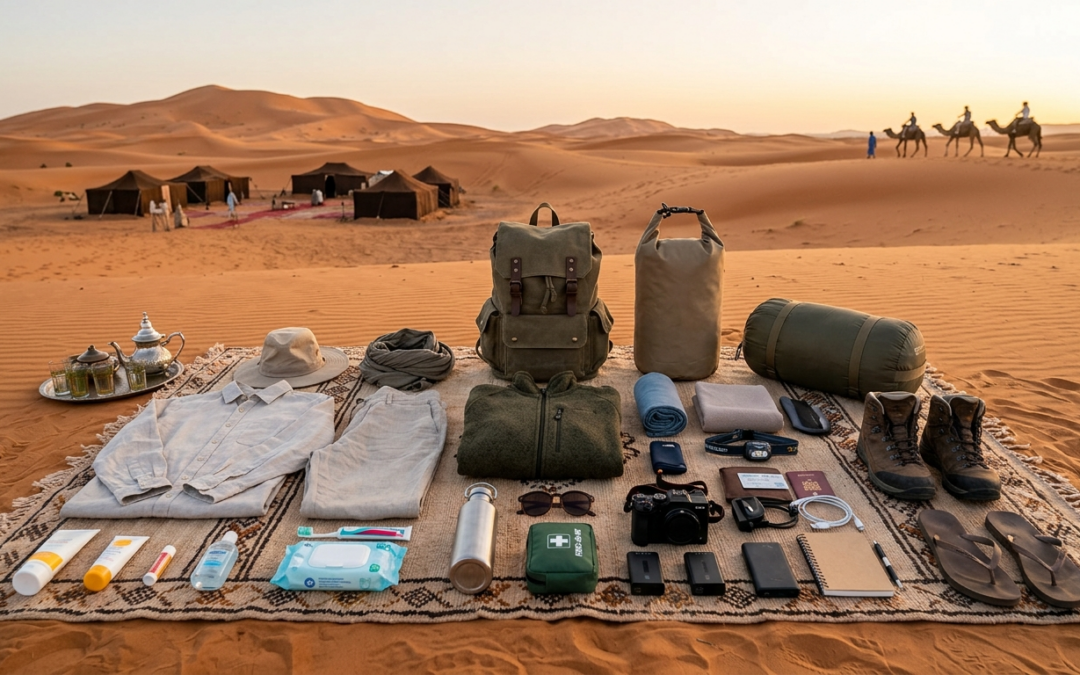
Planning a journey into the Moroccan Sahara? Then knowing what to pack for a Morocco desert trip will make your adventure much more comfortable. The desert is beautiful, peaceful and full of unforgettable moments. However, the environment is also very different from a normal city or beach holiday.
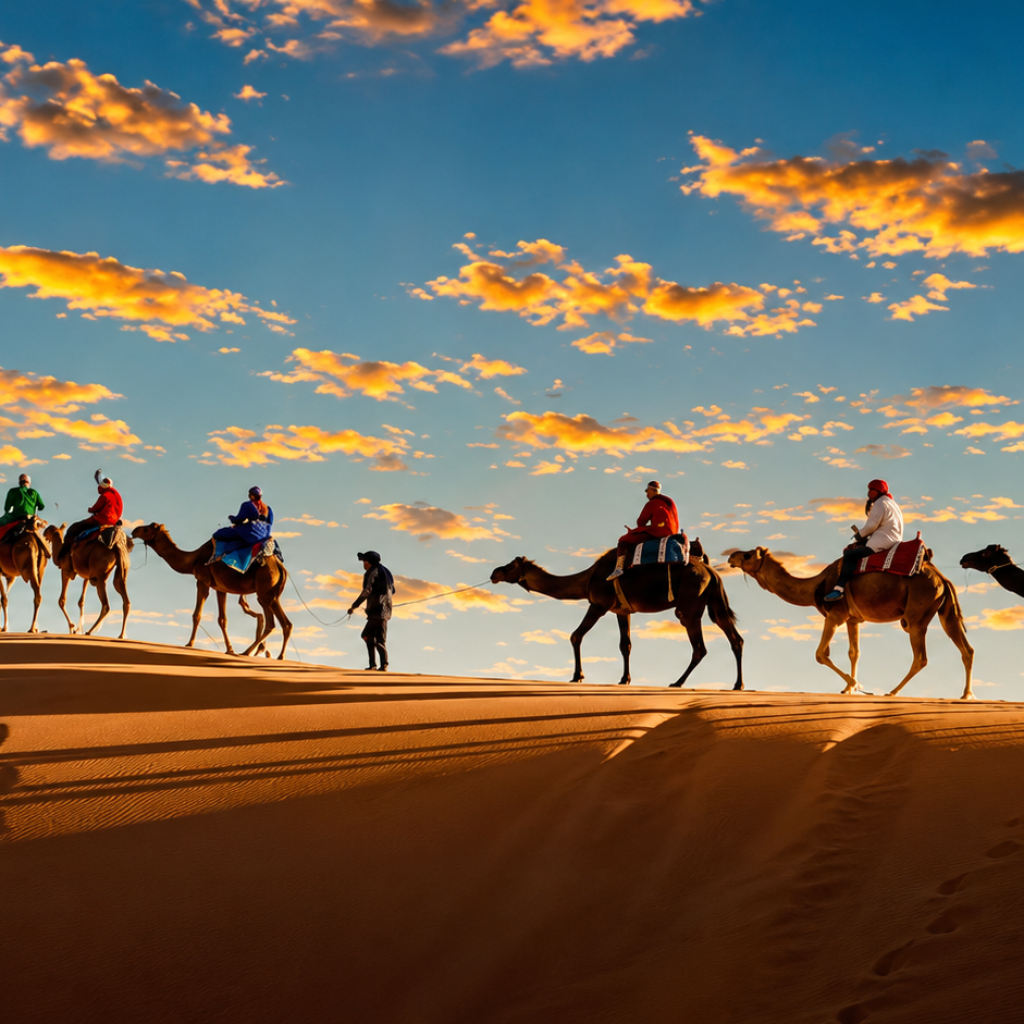
During your journey, you may ride a camel across the dunes, walk through the sand, enjoy Moroccan tea with local nomads, watch the sunset and sit around a campfire beneath the stars. At the same time, temperatures can change quickly between day and night. Therefore, choosing practical clothing and useful travel items is more important than bringing a large suitcase.
Whether you are joining Sahara Vibe for a camel trek, a wild desert camp or a few nights near Erg Chigaga, this guide will help you prepare without overpacking.
what to pack for a Morocco desert trip
Keep Your Desert Luggage Simple
First of all, you do not need to bring your entire suitcase into the Sahara. A small backpack, soft travel bag or comfortable holdall is much easier to manage.
If you are travelling around Morocco before or after your desert adventure, you can usually keep your main luggage safely stored and take only the things you need for the desert. As a result, you will have less to carry and more freedom during your journey.
In addition, a smaller bag is easier to protect from sand. Fine desert sand can get into almost everything, so keeping your important belongings in sealed bags is a simple way to protect them.
what to pack for a Morocco desert trip
Our advice is simple: pack light, choose practical items and leave unnecessary things behind.
Choose Comfortable Desert Clothing
The Moroccan Sahara can be warm during the day. However, evenings and early mornings can feel much cooler, especially during the colder months.
For this reason, wearing layers is one of the easiest ways to stay comfortable. You can remove a layer when the sun becomes strong and put it back on after sunset.
what to pack for a Morocco desert trip
We recommend bringing:
- Lightweight T-shirts
- Loose trousers or comfortable travel pants
- Long-sleeved shirts
- Lightweight shorts for relaxing around camp
- Underwear and socks
- A warm sweater or fleece
- A lightweight jacket
- Comfortable sleepwear
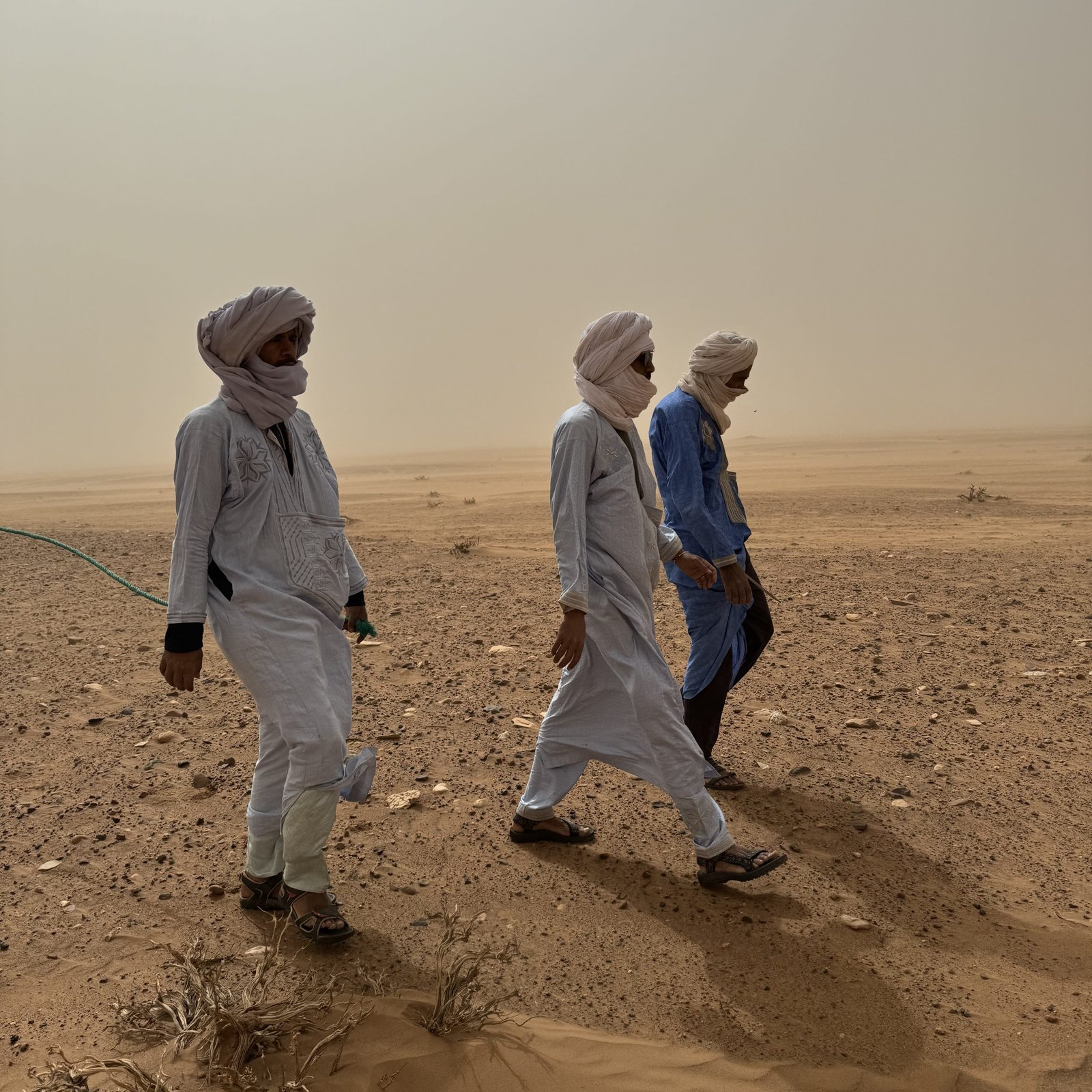
- A scarf or traditional desert chech
Cotton and linen are particularly comfortable in warm weather. Likewise, loose-fitting clothing allows air to circulate while giving you better protection from the sun.
There is also no need to bring a different outfit for every day. Instead, choose a few simple pieces that you can combine easily.
What to Wear for Camel Trekking
Camel trekking is one of the most memorable parts of a Sahara journey. However, comfort should come before fashion when you are spending time on a camel.
Loose trousers, lightweight travel pants or leggings are good choices. They allow you to sit comfortably during the ride and make it easier to move when getting on and off the camel.
In addition, a long-sleeved shirt can protect your arms from the sun. A scarf is also useful because it can protect your face and neck when the wind becomes stronger.
During your trip, you may see colorful scarves in local markets and shops. If you choose one, our team can also show you how to wear it as a traditional chech. This simple piece of fabric is especially useful in the desert because it can protect you from sunlight, wind and blowing sand.
Choose the Right Shoes
Good footwear can make a big difference in the desert. You do not need several pairs, but you should bring at least one comfortable pair for walking.
Walking shoes, light hiking shoes or comfortable trainers are suitable for most desert activities. However, avoid very delicate shoes or open mesh materials because fine sand can easily enter them.
For relaxing around camp, sandals or flip-flops are also useful. Therefore, two pairs of footwear are usually more than enough.
Furthermore, walking through soft sand can be surprisingly tiring. Good support will make climbing dunes much easier, especially if you plan to walk during sunrise or sunset.
If you want to experience the dunes barefoot, wait until the sand has cooled in the evening. Nevertheless, always watch where you step and avoid plants or sharp objects.
Protect Your Eyes and Skin
Sun protection is an essential part of what to pack for a Morocco desert trip. The Sahara has very little natural shade, so you will spend a lot of time exposed to sunlight.
For this reason, bring:
- Sunglasses
- High-SPF sunscreen
- SPF lip balm
- A hat or cap
- A lightweight scarf
Sunglasses are especially helpful because sunlight reflects strongly from the sand. Meanwhile, a hat or scarf can provide additional protection for your head, face and neck.
Remember to apply sunscreen regularly, particularly when you are walking or riding a camel for several hours.
Bring a Reusable Water Bottle
Staying hydrated is also important in the desert.
Bring a reusable water bottle and keep it with you during your activities. It will be useful while walking through the dunes, riding a camel and travelling between desert locations.
Instead of waiting until you feel very thirsty, drink water regularly throughout the day. This is particularly important during warmer months.
Pack Your Toiletries Carefully
You do not need to bring your entire bathroom into the Sahara. Instead, keep your toiletries small and practical.
A small waterproof or sealed bag is ideal because it helps keep everything protected from sand.
You may want to pack:
- Toothbrush and toothpaste
- Deodorant
- Moisturizer
- Lip balm
- Personal hygiene products
- Small shampoo and shower products
- Wet wipes
- Hand sanitizer
- Small towel
In addition, tissues or biodegradable wipes can be useful during longer journeys through remote areas.
Most importantly, remember to bring any personal products that you normally use every day.
Bring Personal Medication
A small personal first-aid kit can also be useful during your Morocco desert trip.
For example, you may want to carry:
- Your regular medication
- Basic pain relief
- Plasters
- Antiseptic wipes
- Rehydration salts
- Travel sickness medication if needed
- SPF lip balm
- Insect repellent if required
You do not need to bring a complete medical kit. Instead, focus on the things you personally use or may reasonably need while travelling.
If you forget something important, pharmacies are available in Moroccan towns along the way. However, it is still better to bring your essential medication with you.
Protect Your Phone and Camera
The Sahara offers incredible opportunities for photography. You can capture camel caravans at sunset, golden dunes at sunrise, traditional desert camps and clear night skies.
However, sand is one of the biggest enemies of electronic equipment.
Therefore, keep your phone or camera protected whenever you are not using it. A small zip-seal bag can help prevent fine sand from entering your equipment.
If you bring a camera, you should also pack:
- A lens cloth
- A protective case
- Spare batteries
- An extra memory card if needed
Meanwhile, a smartphone is often more than enough for capturing your desert memories. So, unless photography is a major hobby, you do not need to carry heavy camera equipment.
Don’t Forget Your Charger and Power Bank
Your phone will probably become one of your most useful travel tools. You may use it for photos, communication, music and other travel needs.
Therefore, remember your charging cable and phone charger.
A portable power bank is also a good idea. It gives you extra battery life when you are away from a charging point.
In addition, photographers should consider bringing spare camera batteries and memory cards. That way, you will not have to worry about running out of power just before sunset.
Bring a Small Torch
Although most smartphones have a built-in flashlight, a small torch or headlamp can be more convenient at night.
For example, you may use it when walking between tents, looking through your bag or moving around the camp after dark.
Our desert camps provide lighting, but having your own small torch gives you extra freedom. Furthermore, a headlamp allows you to keep both hands free.
Pack a Warm Layer for the Evening
One of the biggest surprises for first-time desert travelers is the change in temperature.
During the day, the Sahara can feel very warm. After sunset, however, the temperature can drop significantly, especially during autumn, winter and early spring.
Therefore, always pack a fleece, sweater or lightweight jacket.
This will be particularly useful if you plan to sit outside around the campfire, watch the stars or wake up early for sunrise.
What You Can Leave at Home
Packing for the desert does not mean taking everything you own.
In fact, bringing too much can make your journey less comfortable. You probably do not need:
- A large suitcase for the desert
- Many different outfits
- Expensive shoes
- Heavy clothing during warm months
- Large bottles of toiletries
- Too many electronic devices
- Unnecessary accessories
Instead, focus on comfort and practicality.
After all, your time in the Sahara is not about having a perfect wardrobe. It is about experiencing the landscape, meeting local people, enjoying simple moments and slowing down.
Your Morocco Desert Packing Checklist
Before leaving for your Sahara adventure, check that you have the essentials.
Clothing
- Loose trousers
- T-shirts
- Long-sleeved shirt
- Warm sweater or fleece
- Lightweight jacket
- Underwear and socks
- Comfortable sleepwear
- Scarf or chech
Footwear
- Comfortable walking shoes
- Sandals or flip-flops
Sun Protection
- Sunglasses
- Sunscreen
- Hat or cap
- SPF lip balm
Personal Items
- Toiletries
- Personal medication
- Small first-aid kit
- Reusable water bottle
- Hand sanitizer
Technology
- Phone
- Charger
- Power bank
- Camera if required
- Spare batteries
- Memory card
Useful Extras
- Small torch or headlamp
- Small backpack
- Zip-seal bags
- Lens cloth
Enjoy the Sahara, Not Your Suitcase
Ultimately, the best way to prepare for the Moroccan Sahara is to keep things simple.
Bring comfortable clothes, protect yourself from the sun, stay hydrated and keep your important belongings safe from sand. Then, you can forget about your luggage and concentrate on the experience.
At Sahara Vibe, we invite travelers to discover the desert at a slower pace. You can follow a camel caravan across the dunes, enjoy Moroccan tea, share traditional meals, listen to desert music and spend peaceful evenings beneath the stars.
Whether you are joining us for a short desert escape or a longer camel trekking adventure, you do not need much to enjoy the Sahara.
Pack light. Travel comfortably. Enjoy the desert.
Discover our [Morocco camel trekking experiences], explore our [Erg Chigaga desert tours], or contact Sahara Vibe to prepare for your journey into the Sahara.
0 Comment